Highlights
General admission to Te Puia and the Whakarewarewa geothermal valley, including access to the Pohutu geyser, mud pools, fumaroles and steaming terraces.
About this experience
Te Puia sits in the Whakarewarewa geothermal valley on the edge of Rotorua — a mix of roaring geysers, boiling mud pools, silica terraces and the New Zealand Māori Arts and Crafts Institute. A typical visit combines a guided walk through the geothermal valley with time at the carving and weaving schools, a kiwi nocturnal house and, on many tickets, a live Māori cultural performance.
What's included
- General admission to Te Puia and the Whakarewarewa geothermal valley, including access to the Pohutu geyser, mud pools, fumaroles and steaming terraces.
- A guided walking tour with a local guide (on most standard day passes), explaining the geology, stories and cultural significance of the valley.
- Entry to the New Zealand Māori Arts and Crafts Institute, where you can watch carvers and weavers at work and learn how traditional arts are passed to new generations.
- Access to the kiwi nocturnal house, giving you a chance to see New Zealand's national bird under low light conditions.
- On many tickets: a Māori cultural performance in a carved meeting house, with waiata (songs), haka, poi and explanations of protocol and symbolism.
- Use of on-site facilities such as toilets, gift shop, café/restaurant areas, viewing platforms and marked walking tracks.
- NOT included: transport to/from Te Puia, hotel pick-up unless you book it, meals and drinks, premium evening experiences, or add-on private tours and photographs.
Who it's for
- Ideal for visitors who want both geothermal sights and Māori culture in a single, structured experience.
- Great for couples, families, small groups and solo travellers who are comfortable with 1—2 hours of walking on formed tracks.
- Suitable for most ages and fitness levels; paths are generally well maintained, with a mix of flat sections and gentle slopes.
- Works well as a half-day anchor activity in Rotorua, especially if you combine it with lakeside walks or other attractions nearby.
- Less suitable if you strongly dislike sulphur smells, have difficulty walking moderate distances, or prefer completely unguided wandering with no schedules.
What you'll do
- Arrive at Te Puia's entrance a short drive from central Rotorua, check in at the ticket desk and join your assigned guided tour group or start exploring with a map if you have a self-guided ticket.
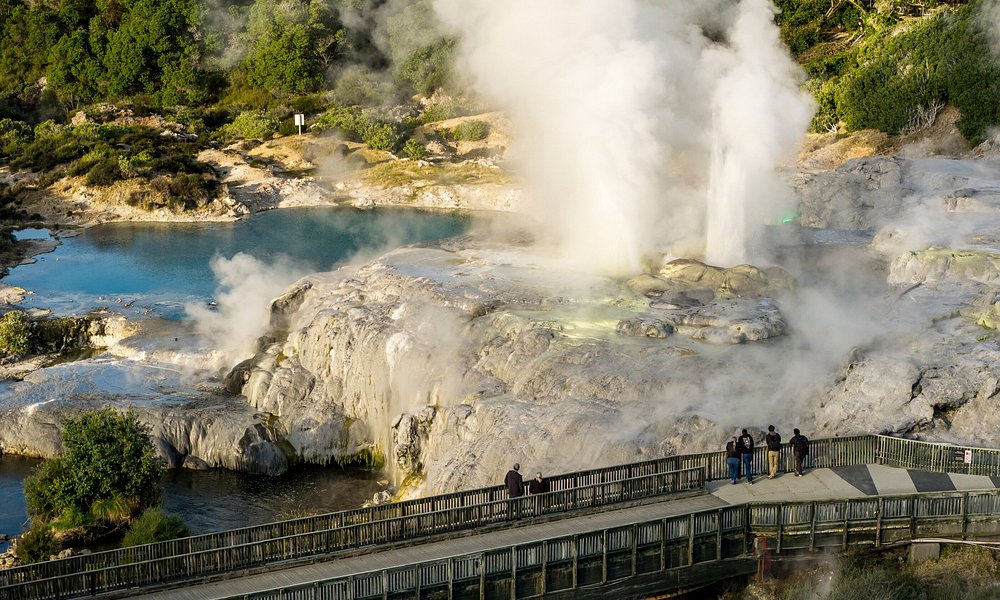
- Walk with your guide past boiling mud pools, steaming vents and coloured silica terraces, hearing how geothermal energy shapes everyday life in the valley.
- Spend time at Pohutu geyser, which erupts regularly, watching powerful jets of hot water shoot into the air against a backdrop of carved structures and bush.
- Visit the Māori Arts and Crafts Institute spaces, where carvers and weavers demonstrate traditional techniques and explain how designs carry whakapapa (genealogy) and stories.
- Step into the kiwi nocturnal house to quietly look for kiwis foraging under dim light, then continue along boardwalks and paths to more geothermal viewpoints.
- If your ticket includes it, take a seat inside the carved meeting house for a cultural performance, with a formal welcome, haka and songs, then time for questions and photos at the end.
- Finish at the café or gift shop for a snack, coffee and souvenirs before heading back into Rotorua or on to your next activity.
Before you go
- Tickets / price (starts from): standard day passes with guided tour and access to geothermal valley and arts institute commonly start at around 80 NZD per adult, with cheaper child and family options available; tickets that add a full cultural performance or evening dining experience cost more.
- Opening hours: Te Puia normally operates during daytime hours, with first entries in the morning and last entry mid—late afternoon; cultural show times are scheduled, so you need to plan around specific performance slots.
- Safety: stay strictly on marked paths and boardwalks; geothermal ground can be fragile and the water extremely hot. Obey all fences, barriers and instructions from staff.
- Dress code & comfort: wear comfortable walking shoes and bring a light jacket — steam and weather can make it feel cool or damp in places, and Rotorua conditions change quickly.
- Accessibility: many main areas are accessible via formed paths and ramps, but some viewpoints involve steps or steeper gradients; check current accessibility information if you use a wheelchair, mobility aid or pram.
Good to know
- Location: Te Puia is located just a few minutes' drive from central Rotorua, often combined with lakefront walks, skyline gondola, hot pools or nearby geothermal attractions in a one- or two-day Rotorua stay.
- Time needed: plan about 2—4 hours depending on whether you join a guided tour, see a cultural show and linger over photos or a café stop.
- Weather: the experience is largely outdoors; light rain can add drama to the steam but makes paths slicker, so take care after wet weather and bring a raincoat if showers are forecast.
- Smell: like much of Rotorua, the valley has a noticeable sulphur smell from hydrogen sulphide gas — strong in some spots but part of the normal geothermal environment.
- Photos: you can freely take photos in most outdoor areas; some cultural spaces and performances may have restrictions or protocols, so follow your guide's advice.
Why this is worth it
Budget around 80 NZD per adult and 2—4 hours for Te Puia — a Rotorua experience that blends an active geothermal valley (Pohutu geyser, mud pools, steaming terraces) with live Māori arts, a kiwi house and, on many tickets, a powerful cultural performance in a carved meeting house.