Highlights
Free access to the park area itself year-round: paths, lawns, ponds and deer-filled open spaces.
About this experience
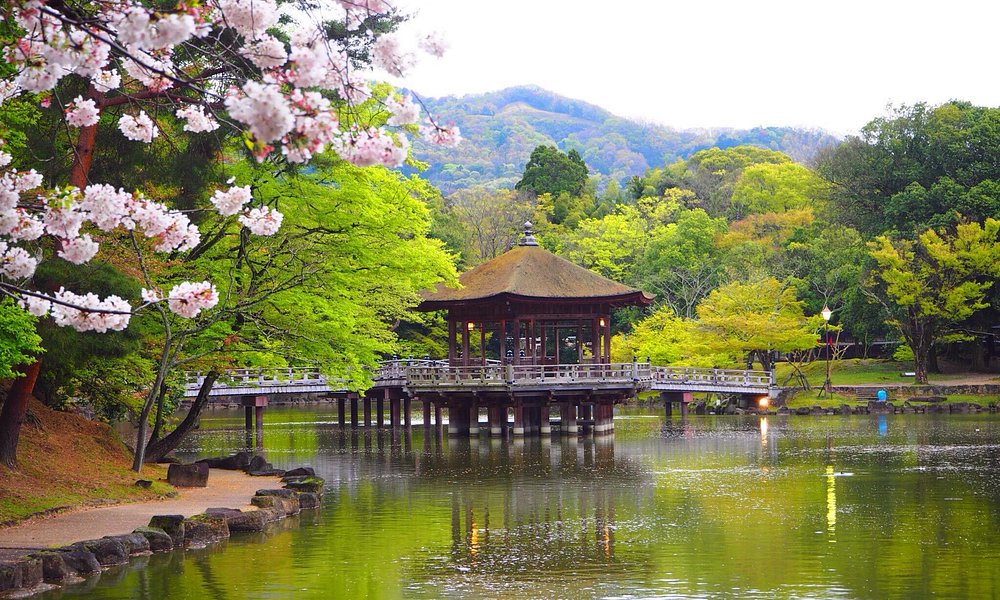
A huge historic park in Nara at the foot of Mount Wakakusa, famous for its free-roaming deer, World Heritage temples and big open lawns and ponds. The broader Nara Park area covers roughly 500—660 hectares when you include nearby temple and shrine grounds, making it one of Japan’s classic day-trip stops from Kyoto or Osaka.
What's included
- Free access to the park area itself year-round: paths, lawns, ponds and deer-filled open spaces.
- The chance to see and (carefully) feed the semi-tame sika deer that wander the park.
- Easy walking access to major sights within or beside the park such as Tōdai-ji (Great Buddha), Kōfuku-ji, Kasuga Taisha and the Nara National Museum (each with their own paid entry).
Who it's for
- All ages: families, couples, solo travellers and photographers.
- Great for anyone who wants a relaxed outdoor day with temples + nature rather than a tight, indoor schedule.
- Most of the main paths are gently sloping or flat, though some approaches to shrines and viewpoints have stairs.
What you'll do
- Walk from Kintetsu Nara or JR Nara Station into the park and start spotting deer almost immediately.
- Buy official “shika-senbei” (deer crackers) from licensed vendors and feed the deer in designated areas, following the posted etiquette.
- Stroll between lawns, ponds and tree-lined paths, then head to one or more major sights like Tōdai-ji’s Great Buddha Hall, Kasuga Taisha’s lantern-lined approaches or the Nara National Museum.
- Take breaks at tea houses or kiosks, then loop back through the park as the light changes.
Before you go
- Tickets / Entry: Nara Park itself is free to enter; there is no park gate or admission fee. The main typical spend is on deer crackers (around ¥200 per pack from vendors, more from vending machines) and separate tickets for individual temples, shrines or museums.
- Hours: the park area is effectively open 24 hours a day, 365 days a year, but daylight hours are best for seeing the deer and visiting paid attractions inside the park, which usually keep standard daytime opening times.
- The deer are wild animals, even if they bow and seem friendly. Do not tease them with food, hit them or feed them anything except the official crackers; bites, nudges or head-butts can happen if you dangle food or ignore signs.
- There are very few trash bins, so you are expected to carry your rubbish out with you.
Good to know
- Address for navigation: around 469 Zoshichō, Nara, 630-8501, Japan, covering a large green area east of central Nara.
- Plan at least 2—3 hours for a basic circuit with deer time and one major temple; a half or full day lets you see more calmly.
- Best seasons are spring (cherry blossoms) and autumn (foliage), but the park is visitable and free year-round.
- Combine with a wander through Naramachi (old town) if you have extra time.
Why this is worth it
Big, free city park with hundreds of semi-tame deer plus top temples around the edges: budget for deer crackers and temple tickets, not for park entry itself, and give it a solid half-day if you can.