Highlights
Access to Knysna Elephant Park for a scheduled guided encounter, usually marketed as “Be Touched by an Elephant” or similar, including:
About this experience
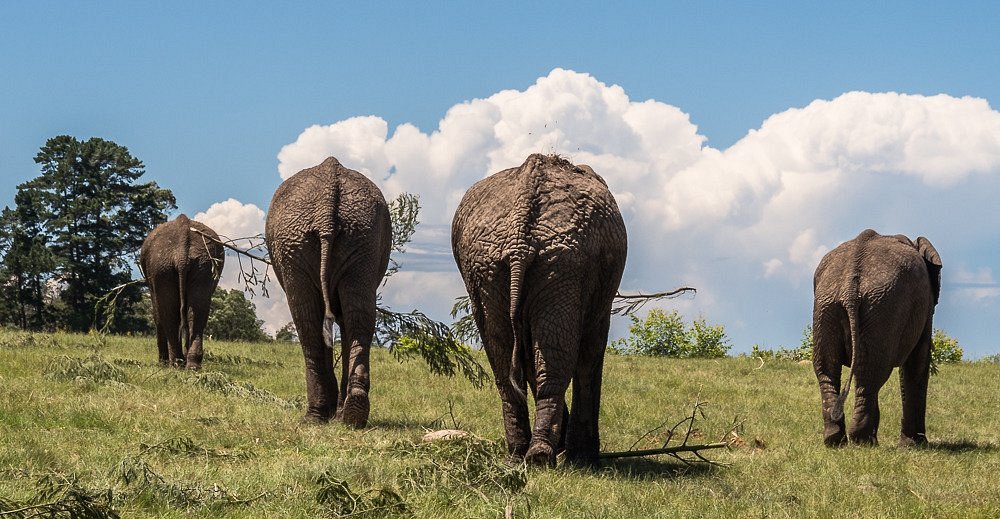
Knysna Elephant Park, just outside Knysna on the Garden Route, is one of South Africa’s best-known elephant experiences — a controlled sanctuary environment where you meet a small herd of rescued and orphaned African elephants on foot and from a vehicle, with strict rules around welfare and interaction. It is not a wild Big Five reserve; it is a dedicated facility focused on close-up, educational elephant encounters.
What's included
- Access to Knysna Elephant Park for a scheduled guided encounter, usually marketed as “Be Touched by an Elephant” or similar, including:
- A short orientation talk about the elephants’ histories, behaviour and park rules.
- A game-viewer or tractor ride out to the fields where the elephants are spending time.
- A structured, on-foot encounter in a controlled area where you stand near the elephants with guides present at all times.
- Time to walk alongside or near the elephants as they move, under guide direction and at a safe distance, with plenty of photo opportunities (no riding).
- The option to feed the elephants with park-provided pellets during certain sessions (when allowed), following staff instructions so it remains safe and calm for everyone.
- Use of basic on-site facilities: reception, briefing area, viewing deck, small restaurant / café, toilets and a shop with elephant-themed souvenirs (all food, drinks and merchandise paid separately).
- NOT included: transport to and from the park, professional photo or video packages, private encounters, overnight lodge stays in the on-site accommodation, or tips for guides and staff.
Who it's for
- Ideal for families, couples and animal lovers who want a close, ethical elephant experience rather than a distant sighting from a safari vehicle.
- Good for travellers driving the Garden Route who do not have time or budget for a full multi-day safari but still want meaningful elephant time.
- Suitable for most ages and fitness levels — you will need to climb into a game-viewer and walk on uneven ground, but distances are short and pace is gentle.
- Less suitable if you only want completely wild, non-habituated elephants in a big national park setting, or if you are uncomfortable with any kind of managed, captive wildlife environment.
What you'll do
- Arrive at Knysna Elephant Park’s reception on the N2, check in for your booked time slot, sign any indemnity forms and listen to a safety and welfare briefing about how to act around the elephants.
- Join your group on a game-viewer or tractor-drawn trailer for a short ride out to the fields or bomas where the elephants are currently spending time.
- Under your guide’s instructions, step down and walk into the designated encounter area, keeping behind the guide line as the elephants approach or move around you.
- Spend 20—40 minutes (varies by programme) standing and walking near the elephants, listening to your guide explain their personalities, histories and behaviour, and taking photos or short videos.
- If the session includes feeding and the elephants are in the right mood, take turns offering park-supplied pellets from open hands, always following guide directions on where to stand and when to move.
- Return to the main centre by vehicle, where you can grab a snack or drink, visit the small museum / information displays, browse the shop and watch the elephants from the viewing deck if they are visible.
Before you go
- Tickets / price (starts from): as a realistic planning baseline, standard adult tickets for a guided elephant encounter are around 450 ZAR per person, with lower prices for children and occasional specials. Exact tariffs and packages change with season and demand, so treat 450 ZAR as a planning figure.
- Duration: expect about 1.5—2 hours total for check-in, briefing, the ride out, on-foot encounter, return and some time in the restaurant / viewing area.
- Age & supervision: young children are welcome on many sessions but must be under close adult supervision; very small children may be restricted from some parts of the encounter for safety reasons.
- Safety rules: no running, shouting, sudden movements or touching the elephants without explicit guide permission. You must stay in the group, obey distances indicated by guides and move when instructed — elephants are big, powerful animals even when calm.
- Welfare stance: there is no elephant riding, and interactions are structured to limit stress and keep a predictable routine. Guests are not allowed to bring their own food for elephants or attempt unsupervised contact.
Good to know
- Location: Knysna Elephant Park lies between Knysna and Plettenberg Bay on the N2, making it an easy stop on a Garden Route itinerary between Mossel Bay, Wilderness, Knysna, Plett and Tsitsikamma.
- Best timing: morning and late-afternoon slots often give nicer light and more comfortable temperatures; midday can be hot and bright but is still fine if that is when you can get a booking.
- Clothing: wear comfortable, neutral-coloured clothes and closed shoes or sturdy sandals — you will walk on dusty, sometimes muddy ground and may be close to elephant feet and dung.
- Photography: phones and normal cameras are welcome; avoid flash and large drones. Staff may offer professional photo options at extra cost if you want a framed or printed memory.
- Booking: advance booking is strongly recommended in peak Garden Route seasons and school holidays, as slots are limited and the park limits group sizes to keep encounters manageable.
Why this is worth it
Budget around 450 ZAR per adult and 1.5—2 hours for Knysna Elephant Park — a structured, welfare-focused elephant encounter on the Garden Route where you ride out in a game-viewer, stand and walk near a small herd of rescued elephants, possibly feed them under guide supervision, and learn their stories rather than just ticking off a distant safari sighting.