Highlights
Conservation entry into the Cape Point / Cape of Good Hope section of Table Mountain National Park, covering the main gate, road network and core viewpoints.
About this experience
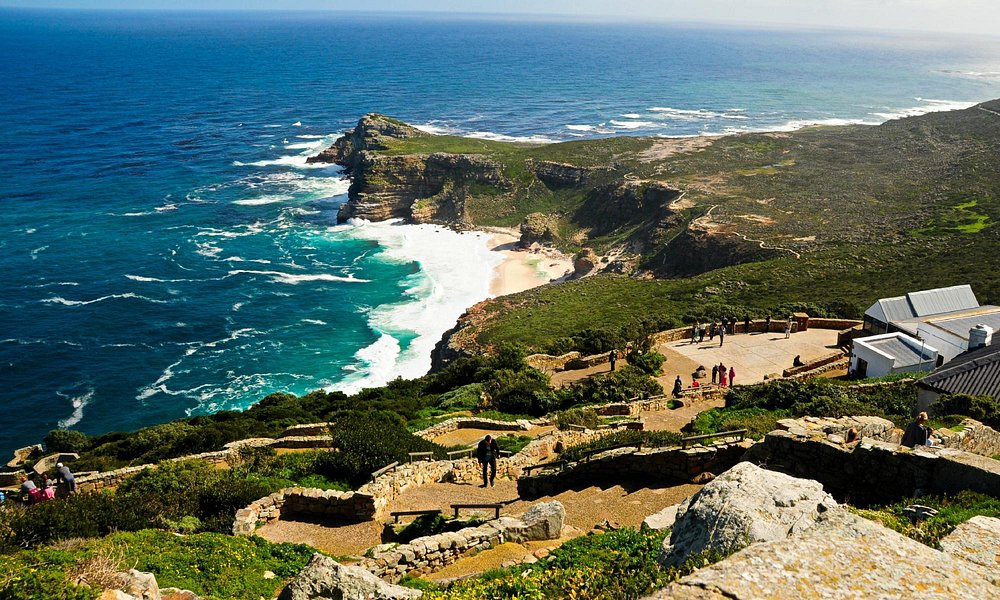
The Cape of Good Hope and Cape Point sit at the tip of the Cape Peninsula inside Table Mountain National Park — a wild, windswept headland of cliffs, fynbos and Atlantic/False Bay views. Most visitors do it as a full- or half-day drive from Cape Town, combining the famous Cape Point lighthouse, the Cape of Good Hope sign, short hikes and frequent animal sightings (baboons, ostriches, antelope, seabirds).
What's included
- Conservation entry into the Cape Point / Cape of Good Hope section of Table Mountain National Park, covering the main gate, road network and core viewpoints.
- Access by car, tour bus, bicycle or on foot to key spots inside the reserve: Cape Point parking area and lighthouse paths, the Cape of Good Hope sign, Diaz Beach viewpoints and multiple roadside lookouts.
- Use of marked walking paths and short trails between viewpoints — from easy boardwalks at the top to slightly rougher coastal and fynbos paths along the cliffs and down towards beaches.
- Wildlife viewing opportunities along the roads and paths: you may see baboons, ostriches, bontebok, eland, tortoises, lizards and plenty of seabirds in a natural, coastal-fynbos setting.
- Basic on-site facilities: main gate with info and maps, internal road signage, parking areas, toilets at key nodes, a restaurant/café and small shops around the Cape Point hub (food and souvenirs paid separately).
- NOT included: transport to and from the park, the Flying Dutchman funicular to the upper lighthouse area (optional paid add-on), guided hikes, restaurant meals, professional photography permits, or any separate activities outside the park boundaries.
Who it's for
- Ideal for first-time visitors to Cape Town who want the classic Cape Peninsula day trip with big ocean views, dramatic cliffs and a "tip of Africa" moment.
- Great for couples, families and small groups who enjoy scenic driving, short walks and viewpoint-hopping more than technical hiking or city attractions.
- Suitable for most ages and fitness levels: you can keep it mostly drive-and-look with short walks to railings, or add steeper paths and longer trails if you want a workout.
- Less suitable if you hate wind and exposed coastal weather, cannot manage any uphill walking at all (even from car parks to viewpoints), or want only beaches and cafés rather than nature and viewpoints.
What you'll do
- Drive with a tour or self-drive down the Cape Peninsula (often via Chapman's Peak, Noordhoek, Simon's Town and/or Boulders Beach), then turn into the Cape Point / Cape of Good Hope gate and pay your conservation fee.
- Follow the park road through fynbos-clad hills to the main Cape Point parking area, watching for ostriches, antelope and baboons near the roadside.
- From the parking area, either:
- Walk up the stepped path to the old lighthouse lookout, or
- Take the Flying Dutchman funicular (extra cost) most of the way up, then finish on foot to reach the top viewing platforms.
- Spend time at the lighthouse viewpoints looking down at sheer cliffs, crashing waves and the meeting of the Atlantic with False Bay, taking photos of the coast and "Cape of Good Hope" direction boards.
- Head back down and drive or walk towards the actual Cape of Good Hope point, where a short path leads from the parking area to the famous wooden sign on the rocky shore.
- If you have extra energy, follow one of the short trails linking the Cape Point and Cape of Good Hope areas along the cliff tops, or walk down to Diaz Beach on its steep stairway for a more remote, wild-feeling cove (no swimming recommended in rough conditions).
- Finish with a snack or meal at the restaurant/café near the Cape Point hub or a picnic at a designated spot, then drive back out through the gate as you return towards Cape Town or other peninsula stops.
Before you go
- Tickets / price (starts from): as a realistic planning baseline, international adult visitors should budget around 400 ZAR for the Cape Point / Cape of Good Hope conservation entry fee. South African residents and children usually pay reduced rates. Exact tariffs change over time — treat this as a planning figure, not a fixed quote.
- Duration: plan about 3—5 hours inside the park itself, and realistically a full-day outing from Cape Town once you include the drive down the peninsula and any other stops (Boulders Beach, Simon's Town, Kalk Bay, etc.).
- Weather & clothing: the Cape can be extremely windy, cool and misty even when Cape Town feels warm. Bring layers, a windproof jacket, hat, sunglasses and sunscreen; sturdy closed shoes or sandals with grip are best for rocky paths.
- Safety & wildlife: keep a strong distance from baboons — do not feed them, leave car doors/windows open or carry visible food around them. Ostriches and antelope are wild, not tame; do not approach closely for selfies or block roads for photos.
- Roads & driving: roads inside the park are tarred but narrow and often unfenced; obey speed limits, watch for sudden stops at viewpoints and for animals on or near the road. At busy times, parking at Cape Point and Cape of Good Hope can fill up — be patient and park only in marked areas.
Good to know
- Location: the Cape of Good Hope and Cape Point lie at the southern end of the Cape Peninsula, roughly 60—75 minutes' drive from central Cape Town without stops; most people combine them with other coastal sights on a loop.
- Best timing: clear days with lighter wind give the best views; mornings and late afternoons have softer light, while mid-day is harsh but still dramatic. In high season and on weekends, arriving earlier usually means fewer crowds and easier parking.
- Swimming reality: beaches inside the park are beautiful but often have cold water, strong currents, rocks and no lifeguards; most visitors treat them as scenic, not swimming, stops.
- Food & facilities: the main restaurant and café near Cape Point can get busy at lunch; you can also bring your own picnic (within park rules) and use designated picnic spots, taking all rubbish back with you.
- Pairing with other stops: popular combos include Chapman's Peak Drive, Hout Bay, Noordhoek, Misty Cliffs, Scarborough, Simon's Town and Boulders penguins — often packaged as a single Cape Peninsula tour.
Why this is worth it
Budget around 400 ZAR per adult and 3—5 hours inside the park (full day from Cape Town) for the Cape of Good Hope and Cape Point — a wild, cliffy tip of the Cape Peninsula inside Table Mountain National Park where you drive between viewpoints, hike short coastal paths, watch waves smash into rocks and maybe spot baboons and ostriches under big Atlantic and False Bay skies.