Highlights
Free entry for Muslim worshippers to the Grand Mosque complex 24 hours a day, including prayer halls, shaded courtyards, upper floors, the Mataf area around the Kaaba and the covered Mas'a corridor between Safa and Marwah when open.
About this experience
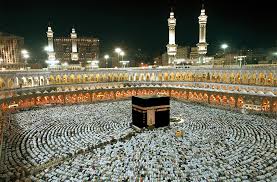
Masjid al-Haram in Makkah is Islam's holiest mosque and the world's largest active place of worship — the sanctuary that surrounds the Kaaba, the qiblah towards which over a billion Muslims face in prayer. The complex includes the Kaaba and Mataf (tawaf area), the Mas'a between Safa and Marwah for sa'i, the Zamzam well and multiple expansions and courtyards that can now accommodate well over a million worshippers at peak times.
What's included
- Free entry for Muslim worshippers to the Grand Mosque complex 24 hours a day, including prayer halls, shaded courtyards, upper floors, the Mataf area around the Kaaba and the covered Mas'a corridor between Safa and Marwah when open.
- The ability to perform the core Umrah and Hajj rituals that take place inside Masjid al-Haram, especially tawaf (circling the Kaaba seven times) and sa'i (walking between Safa and Marwah), subject to valid permits and crowd-management rules.
- Access to facilities built for pilgrims such as extensive ablution areas, thousands of toilets, escalators and lifts, air-conditioned prayer halls, Zamzam water points, shaded courtyards and clearly marked gates and signage.
- Large areas designated for men and women, with multilingual announcements, screens and staff/volunteers helping manage flows of people during busy periods.
- NOT included: visas, transport to Makkah, accommodation, private guides, food and drink, or commercial Hajj/Umrah packages — all of those are organised separately via licensed agents or self-booking.
Who it's for
- Reserved for Muslims only — non-Muslims are not permitted to enter Masjid al-Haram or the marked Haram zone around central Makkah.
- Central for pilgrims performing Umrah throughout the year and Hajj during Dhu al-Hijjah, as well as for residents and visitors who come to pray daily and in Ramadan.
- Suitable for adults and families who can handle long periods of walking, standing and sitting on carpets in very large crowds; elderly and disabled worshippers benefit from lifts, ramps and wheelchair services, but crowding and distances still require patience and planning.
- Not suitable for anyone unable to be in dense crowds, extreme summer heat or who cannot follow strict crowd-control instructions; medical conditions should be discussed with a doctor before travel.
What you'll do
- Travel to Makkah with a valid visa, then walk or take approved transport into the Haram area and approach one of the many numbered gates of Masjid al-Haram, passing through security checks and bag screening.
- Enter the mosque, remove your footwear and find your way to a suitable area for prayer — for many first-time visitors the priority is to descend towards the Mataf to see the Kaaba, then perform tawaf if they are in ihram for Umrah or Hajj.
- For Umrah, after completing tawaf you will usually pray two rak'ahs, drink Zamzam water and then perform sa'i between Safa and Marwah in the long enclosed Mas'a corridor, following the marked green-light section where men jog lightly if they are able.
- Outside the core rites, you will join the five daily congregational prayers, recite Qur'an, make du'a, and spend time in reflection in different parts of the mosque and courtyards, adjusting where you sit according to crowd levels and weather.
- Between visits you will return to your hotel or accommodation in Makkah to rest, eat and rehydrate, often planning your day around cooler night-time hours and the times of the five daily prayers.
Before you go
- Tickets / price (starts from): there is no entrance fee to Masjid al-Haram itself — access for Muslim worshippers is free. Treat 0 SAR as the base cost and budget separately for visas, flights, hotels, local transport and packages.
- Visas & permits: to perform Umrah or Hajj you need the appropriate visa and, under current regulations, an Umrah or Hajj permit generated through the Nusuk platform or connected systems, with specific date and time slots for key rites and crowd management. Rules on visa validity, hotel booking requirements and which visa types can perform Umrah are updated regularly, so always check the latest official guidance before travel.
- Opening hours: Masjid al-Haram operates 24 hours a day, seven days a week, with prayer, tawaf and sa'i continuing around the clock except for brief operational pauses when areas are cleaned or reconfigured.
- Dress code: modest Islamic dress is mandatory — men typically wear ihram for Umrah/Hajj or long, loose clothing for regular visits; women wear abayas or similarly loose, full-length garments with hijab covering the hair. Clothing must not be tight, transparent or heavily perfumed.
- Behaviour & safety: this is the holiest site in Islam — keep voices low, avoid pushing, follow one-way flow signs and staff directions, and do not block paths, stairs or entrances for photos. Never climb barriers, ledges or equipment, and avoid dangerous behaviour such as filming while walking in heavy crowds.
Good to know
- Location: Masjid al-Haram is in the heart of Makkah, surrounded by hotel towers, shopping centres and pedestrian zones; most pilgrim accommodation is within a walk or short shuttle ride of one of the main gates.
- Capacity: after multiple expansion projects, the Grand Mosque complex can now host well over a million worshippers at peak times across indoor halls, courtyards, upper floors, the Mataf and the Mas'a areas, with further expansion projects ongoing to increase capacity even more.
- Time needed: many pilgrims plan their entire stay in Makkah around repeated visits to Masjid al-Haram. Even if you only pass through Makkah briefly, allow several hours per visit for security, reaching a spot, performing prayers or rites and exiting again through large crowds.
- Peak seasons: the mosque is at its busiest during Ramadan and the days of Hajj, as well as most weekends and evenings. If you want slightly lower crowds, aim for off-peak months outside Ramadan/Hajj and visit at less popular times of day.
- Services: within walking distance you'll find medical centres, food courts, pharmacies, currency exchange, shops for ihram and prayer items, and official guidance points; many signs and announcements are in Arabic and English, with visual cues to help manage flows.
Why this is worth it
Expect 0 SAR to enter Masjid al-Haram itself but plan carefully for visas, permits, heat and huge crowds — this is the holiest mosque in Islam, open 24/7 in the centre of Makkah, where Muslim pilgrims come mainly to perform tawaf around the Kaaba, sa'i between Safa and Marwah and join massive congregational prayers as part of Umrah or Hajj.