Highlights
Standard entry ticket to the Taj Mahal complex via one of the main gates (East, West or, less commonly for tourists, South), giving access to the forecourts, the main charbagh gardens, the reflecting pool axis and the marble platform around the mausoleum.
About this experience
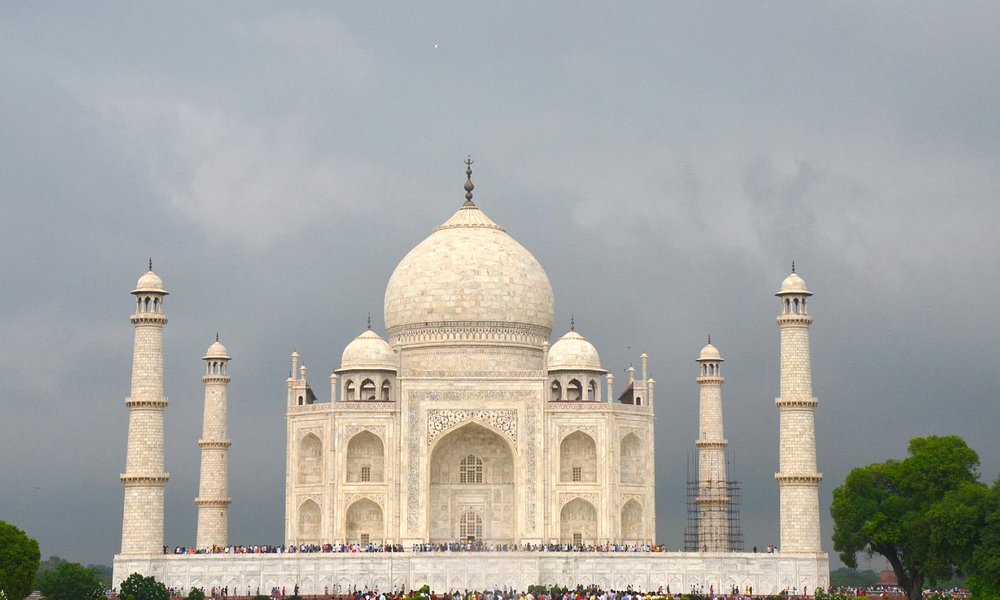
The Taj Mahal in Agra is India's most famous monument — a 17th-century white marble mausoleum built by Mughal emperor Shah Jahan for his wife Mumtaz Mahal on the banks of the Yamuna River. A UNESCO World Heritage Site and one of the New Seven Wonders of the World, it combines a marble tomb, reflecting pools, gardens, mosques and red sandstone gateways that change colour through the day, from soft pre-dawn blue to golden sunset.
What's included
- Standard entry ticket to the Taj Mahal complex via one of the main gates (East, West or, less commonly for tourists, South), giving access to the forecourts, the main charbagh gardens, the reflecting pool axis and the marble platform around the mausoleum.
- Add-on ticket (recommended) for entry to the main mausoleum chamber and central marble platform, allowing you to go inside the tomb area and walk right around the marble structure instead of viewing it only from the gardens.
- Access to the mosque and jawab buildings flanking the mausoleum, plus multiple photo points along the central water channel and from the side terraces overlooking the Yamuna.
- Use of basic facilities such as security-approved cloakrooms outside the main gates, toilets inside the complex, drinking water points and official shoe covers or shoe-deposit areas for entering the marble platform and mausoleum.
- NOT included: licensed tour guide services, hotel pick-up and drop-off, rickshaw or battery cart from parking lots to the gates, commercial photography or drone use, and night-viewing tickets on full-moon dates (these are sold separately with very limited slots).
Who it's for
- Ideal for first-time visitors to India, couples, families and solo travellers who want to see the country's most iconic monument with minimal physical effort.
- Works well for all age groups who can handle light walking on flat paths and a few sets of steps; benches and railing edges in the gardens provide frequent rest spots.
- Especially attractive to photographers and romantically inclined travellers who want sunrise, sunset or misty early-morning views and classic reflection shots.
- Less suitable if you strongly dislike crowds, security checks and queues, or if you have no interest in historical / architectural sites and want only high-adrenaline activities.
What you'll do
- Arrive at the Taj Mahal parking area and transfer by foot, rickshaw or electric shuttle to your chosen gate, then pass through ticket check and airport-style security screening.
- Walk through the forecourt and red sandstone gateway (Darwaza-i Rauza); pause in the archway for the famous first framed view of the Taj Mahal across the gardens.
- Stroll along the central path by the reflecting pools, stopping at the main photo points used on postcards and wedding shoots, and then move closer to the marble plinth.
- Either:
- stay in the garden areas for wide-angle photos and relaxed views, or
- use your mausoleum add-on ticket to climb the steps to the marble platform, put on shoe covers or leave shoes at the stand, circle the exterior up close and visit the inner tomb chamber in a slow-moving loop.
- Explore the side mosque and jawab buildings, look out over the Yamuna River from the rear terrace, and take more photos of the Taj from slightly different angles.
- Exit via your chosen gate, collect any stored items from the cloakroom, and continue your Agra day with nearby sights such as Agra Fort or Mehtab Bagh across the river for sunset views.
Before you go
- Tickets / price (starts from): as a realistic guide, foreign adult visitors should budget around 1,300 INR for a combined ticket that includes both Taj Mahal garden/complex entry and mausoleum access; Indian citizens pay significantly less (roughly 250 INR with mausoleum access), and children under 15 (Indian or foreign) are usually free. Exact slabs and add-ons can change, so always check the latest official rates before travel.
- Opening hours: the Taj Mahal is generally open from sunrise to sunset (approximately 06:00—18:30) every day except Friday, when it is closed to tourists for mosque prayers. Separate, limited night viewing around full-moon dates uses different timings and tickets.
- Visit duration: plan about 2—3 hours inside the complex for an unhurried visit; sunrise and very late afternoon slots are the most atmospheric but also popular.
- Security & restricted items: expect full bag and body scans; large bags, tripods, drones, lighters, cigarettes, food and some electronics are restricted or not allowed. Carry only essentials (camera/phone, wallet, water in permitted containers, small daypack if needed).
- Dress code & conduct: there is no strict formal dress code, but modest clothing that covers shoulders and knees is respectful. Do not touch or lean on delicate inlay work, climb onto railings or barriers, or write/etch anything on the marble or sandstone.
Good to know
- Location: the Taj Mahal stands in Agra, about 200—230 km from Delhi, reachable by high-speed Gatimaan / Vande Bharat trains, overnight trains, express buses or private car on the Yamuna Expressway.
- Best timing: sunrise gives cooler temperatures, softer light and somewhat smaller crowds; late afternoon to sunset offers warm glow and classic golden photos. Midday is hottest and harshest for photography but sometimes less chaotic than the peak sunrise rush.
- Air quality & visibility: winter months can bring fog or haze that softens or partly hides the monument, especially at dawn; clearer blue-sky conditions are more common outside peak fog season.
- Guides & audio: licensed local guides and audio guides can be hired near the entry or via agencies; using one can help you navigate efficiently, learn the history and avoid common tout scams.
- Pairing with other sights: most visitors combine the Taj Mahal with Agra Fort and, time permitting, Mehtab Bagh across the river or Fatehpur Sikri as a wider Mughal heritage day.
Why this is worth it
Budget around 1,300 INR per foreign adult (less for Indian citizens) and 2—3 hours for the Taj Mahal — a sunrise-to-sunset visit to India's most famous marble mausoleum in Agra, where you pass security, walk through Mughal gardens and reflecting pools, and optionally enter the main tomb chamber and marble platform for close-up views and photos.