Highlights
Free access to the main Chinatown streets and pedestrian zones around Pagoda Street, Trengganu Street, Smith Street, Temple Street and South Bridge Road.
About this experience
Chinatown in Singapore is a compact historic district of shophouses, temples, markets and food streets just outside the CBD — part heritage quarter, part open-air night market and part hawker-food paradise. Instead of one gated attraction, it's a whole neighbourhood where you walk, browse, eat and dip in and out of temples and shops.
What's included
- Free access to the main Chinatown streets and pedestrian zones around Pagoda Street, Trengganu Street, Smith Street, Temple Street and South Bridge Road.
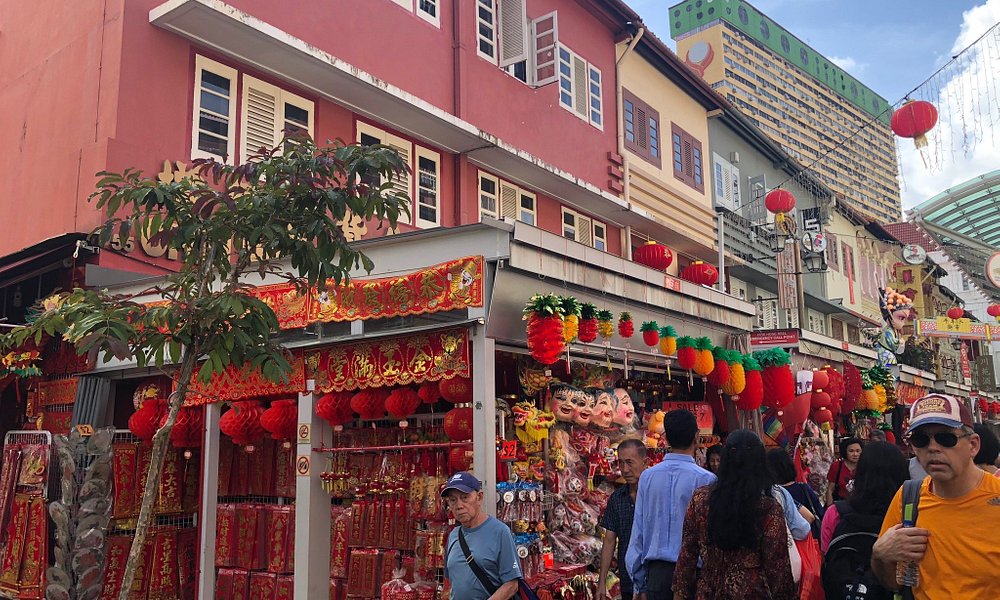
- Street-level views of restored shophouses with colourful facades, traditional signboards and hanging lanterns, especially atmospheric in the evenings and around festivals like Chinese New Year and Mid-Autumn.
- The chance to visit major temples in the area (each with its own customs and small donations/offerings, but no big entry fee) such as Buddha Tooth Relic Temple (Buddhist), Sri Mariamman Temple (Hindu) and small clan halls and shrines.
- Dense clusters of souvenir shops, traditional medicine stores, tea shops and stalls selling everything from keychains and T-shirts to cheongsams, snacks and Chinese decorations.
- Easy access to famous food spots like Chinatown Complex Food Centre and nearby hawker centres and cafés for budget-friendly local dishes.
- NOT included: paid entry to any private museums/exhibitions in the area, food and drinks, guided tours, prayer items/offerings at temples, or public-transport/taxi costs.
Who it's for
- Ideal for first-time Singapore visitors who want a walkable, old-meets-new neighbourhood with temples, markets and hawker food in one area.
- Great for couples, solo travellers, families and small groups who enjoy street exploring, architecture and a bit of souvenir shopping.
- Suitable for most ages and fitness levels — streets are mostly flat and walkable, with MRT stations right next door; you can do as short or long a stroll as you like.
- Less suitable if you dislike crowds, narrow sidewalks and touristy souvenir zones, or if you only want quiet green spaces far from any shops.
What you'll do
- Arrive at Chinatown MRT or Maxwell MRT and step straight out into the shophouse streets around Pagoda Street and Trengganu Street.
- Wander the pedestrianised lanes looking at lanterns and shophouses, browsing souvenir stalls and small shops for magnets, clothing, tea and snacks.
- Walk to Buddha Tooth Relic Temple at the edge of Chinatown to see the big, multi-storey temple complex and its main hall; if you wish, step inside respectfully for a quiet look and short prayer.
- Detour to Sri Mariamman Temple on South Bridge Road, Singapore's oldest Hindu temple, to see the colourful gopuram and (if dress code allows) the inner courtyard and shrines.
- Head to a hawker centre such as Chinatown Complex Food Centre or one of the nearby food streets for dishes like chicken rice, char kway teow, satay, roasted meats, dim sum and desserts at local prices.
- In the evening, walk back through the streets as lights come on and the area gets busier, taking night photos of shophouses, lanterns and temple facades before heading back to the MRT or your next stop.
Before you go
- Tickets / price (starts from): visiting Chinatown's streets is completely free; realistically, budget around 10—40 SGD per person for snacks, a hawker meal, drinks and transport depending on how much you eat and shop.
- Dress code: the streets themselves are casual, but temples expect modest clothing — shoulders and knees covered, no extremely short shorts or strapless tops; you may be asked to cover up or borrow a wrap.
- Behaviour: keep voices moderate around temples and prayer areas, remove shoes where requested, and ask before taking close-up photos of people at worship or working in shops.
- Heat & crowds: Chinatown can be hot and busy, especially afternoons and evenings; wear light clothes, comfortable shoes and carry water. Watch valuables in crowds like in any tourist district.
- Opening hours: shops, stalls and temples each have their own hours; street life is strongest from late morning to night, with evenings especially lively.
Good to know
- Location: Chinatown sits just west of Singapore's downtown core; it's directly served by Chinatown MRT and Maxwell MRT, and is within walking distance of Tanjong Pagar, Telok Ayer and the CBD.
- Best timing: late afternoon into evening gives a good mix of open shops, lit-up lanterns and more comfortable temperatures; mornings are quieter and better if you dislike crowds.
- Food focus: Chinatown doubles as a serious food stop — beyond hawker centres, you'll find old-style coffee shops, trendy cafés and Chinese restaurants all within a few blocks.
- Festivals: around Chinese New Year and Mid-Autumn Festival the streets are heavily decorated and night markets/fair stalls appear, but crowds are much denser and hotel prices citywide can spike.
- Pairing with other spots: it's easy to combine Chinatown with nearby Maxwell Food Centre, Telok Ayer temples, Ann Siang Hill/Club Street and a Marina Bay or Clarke Quay evening in the same day.
Why this is worth it
Budget 0 SGD for entry and roughly 10—40 SGD per person for food, shopping and transport, and plan 1.5—3 hours (more if you're eating big) in Singapore's Chinatown — a central historic district of shophouses, temples, markets and hawker food where you walk, browse and eat rather than queue for a single paid attraction.