Highlights
Small-group or coach sunrise tour and guided base walk from Ayers Rock Resort / Yulara to Uluru and back.
About this experience
Uluru (Ayers Rock) is a massive sandstone monolith rising out of the central Australian desert, inside Uluru-Kata Tjuta National Park near the small resort town of Yulara. One of the most immersive ways to experience it is on a sunrise and guided base walk — an early start that combines watching first light hit the rock with a long, storytelling-rich walk around much of its 10.5 km base.
What's included
- Small-group or coach sunrise tour and guided base walk from Ayers Rock Resort / Yulara to Uluru and back.
- Early-morning transport to a sunrise viewing area, with your guide explaining the significance of Uluru and nearby Kata Tjuta as day breaks.
- A guided base walk around most or all of Uluru's 10.5 km circumference, including key sections like the Mala Walk, Kantju Gorge and Mutitjulu Waterhole (exact route varies by operator and conditions).
- Commentary on Anangu (local Aboriginal) culture, Tjukurpa creation stories, rock art sites, flora, fauna and how people have lived around Uluru for thousands of years.
- A simple light breakfast and hot drinks on many tours, plus bottled water top-ups or the chance to refill your own bottle at stops.
- Return transport to Ayers Rock Resort after the walk.
- NOT included: flights to Yulara, accommodation at Ayers Rock Resort, optional premium dinners like Sounds of Silence, helicopter flights, extra park activities or travel insurance. On some tours, the separate Uluru-Kata Tjuta National Park pass is also not included and must be purchased in addition.
Who it's for
- Ideal for travellers who want more than just a quick photo stop — people who are happy to walk several hours and hear deep cultural and natural history stories.
- Great for reasonably active adults and older children who can comfortably walk 8—11 km on mostly flat but often hot, exposed terrain.
- Suits photographers and sunrise chasers who want to see Uluru changing colour as the light shifts from dawn into early morning.
- Less suitable if you dislike very early starts, cannot walk longer distances, or strongly prefer short, bus-only viewing stops.
What you'll do
- Get picked up from Ayers Rock Resort (Yulara) well before sunrise and drive out to a designated viewing area or trailhead near Uluru.
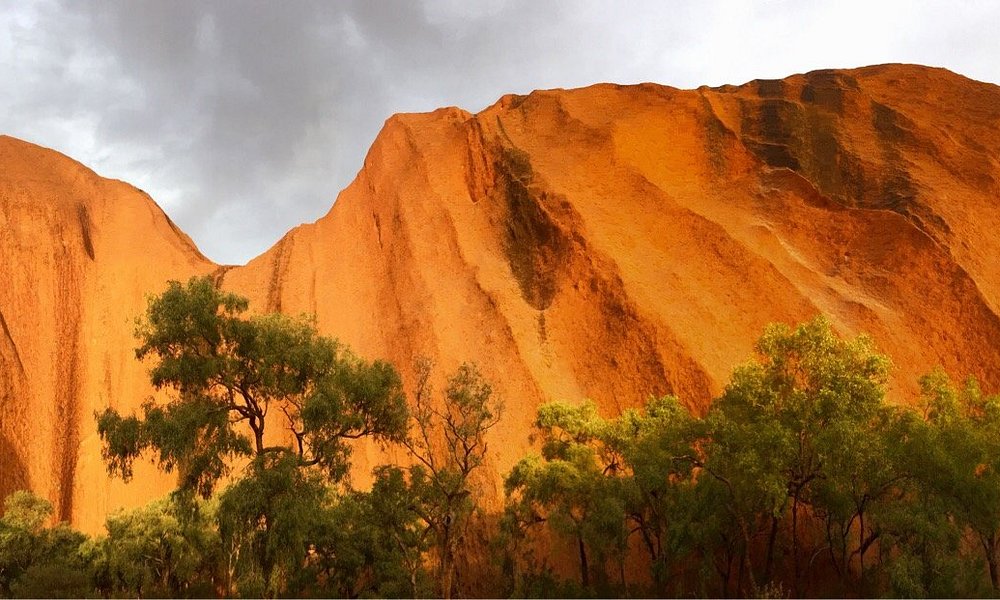
- Watch the sunrise over Uluru, seeing the rock shift through deep purple, red and orange tones as the sun comes up, while your guide introduces the area and its significance.
- Begin the base walk, following your guide along sections of the track that circle Uluru's foot; you'll stop regularly to look at caves, rock art, waterholes and textured cliff faces.
- Hear Tjukurpa stories and explanations of traditional life, bush foods and the meaning of particular sites, with some culturally sensitive areas clearly marked as no-photo zones.
- Take a break for a light breakfast and water, then continue around the base, experiencing how different each side of Uluru looks as you move around it.
- Finish the walk by late morning, meet your vehicle and return to the resort, usually with time left in the day to rest, swim or join another shorter activity.
Before you go
- Tickets / price (starts from): recent operator pricing for a sunrise guided base walk including national park pass typically starts at around 219 AUD per adult, with cheaper child rates and seasonal variations; 220 AUD is a realistic planning figure for a standard adult ticket that includes transport, guide, breakfast and park entry.
- Park pass: Uluru-Kata Tjuta National Park charges a separate 3-day park pass of about 38 AUD per adult, with free entry for visitors under 18; some tours bundle this into the price, others require you to buy it yourself before travel.
- Fitness & distance: the full base walk is roughly 10.5 km; you should be able to walk this distance on mostly flat paths over several hours. If you are unsure, choose a shorter guided walk instead.
- Start time & conditions: pick-ups can be very early (often 04:00—06:00 depending on season). Temperatures can be cold before sunrise and quickly become hot afterwards, so dress in layers.
- Cultural rules: climbing Uluru is permanently closed and considered deeply disrespectful; never attempt to climb or enter closed areas. Obey signs and your guide regarding no-photo zones at sacred sites.
- What to bring: sturdy closed walking shoes, hat, sunscreen, at least 1.5—2 litres of water per person, sunglasses, and a light jacket or fleece for cool pre-dawn temperatures. In warmer months, a fly net for your head can be very helpful.
Good to know
- Location: Uluru sits inside Uluru-Kata Tjuta National Park in the Northern Territory's Red Centre, with most visitors staying in Yulara (Ayers Rock Resort), about 20 minutes' drive from the park entrance.
- Time needed: expect around 5—7 hours total for pick-up, sunrise viewing, the base walk, breaks and return to the resort.
- Best seasons: the experience operates year-round, but winter and shoulder seasons (roughly May—September) usually offer cooler walking temperatures. Summer brings very hot days and earlier start times to avoid the worst heat.
- Wildlife & environment: you may spot desert birds, reptiles and small mammals along the way; stay on marked tracks to protect fragile desert ecosystems and rock art sites.
- Combining activities: many travellers pair a sunrise base walk with a sunset viewing or dinner experience on another day, and a separate visit to Kata Tjuta for the Valley of the Winds or Walpa Gorge walk.
Why this is worth it
Budget around 220 AUD per adult (including park entry on many tours) and 5—7 hours for an Uluru sunrise and guided base walk — an early-morning experience from Yulara that combines watching the first light on the rock with a long, story-filled walk around much of its 10.5 km base, led by a guide who explains Anangu culture, rock art and the desert environment.