Highlights
Standard day admission ticket to the Apartheid Museum for your chosen day/time, giving access to the permanent exhibitions and most temporary displays open to the public.
About this experience
The Apartheid Museum in Johannesburg is South Africa's major museum dedicated to the rise and fall of apartheid — a serious, emotionally heavy collection of films, photos, personal stories and large-scale installations that walk you through segregation, resistance, state violence and the transition to democracy. It's not an easy visit, but it's essential if you want to understand the country beyond safaris and scenery.
What's included
- Standard day admission ticket to the Apartheid Museum for your chosen day/time, giving access to the permanent exhibitions and most temporary displays open to the public.
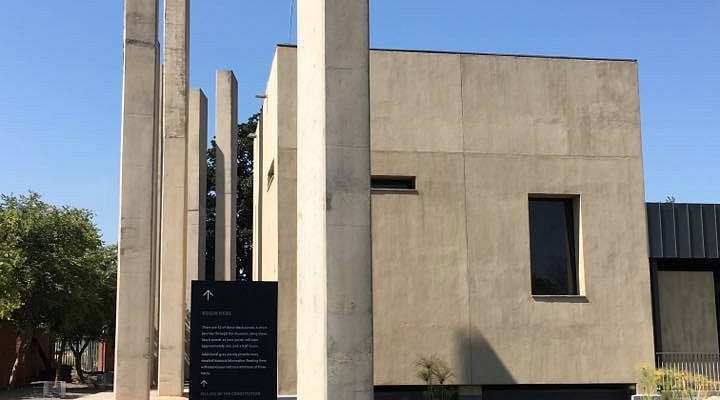
- Entry into an architecturally striking complex of concrete, steel and brick, designed to feel like a physical metaphor for walls, separation and passage from oppression to freedom.
- Access to exhibition halls covering:
- The early history of racial segregation in South Africa and the formalisation of apartheid laws.
- Daily life under apartheid for different communities, including pass laws, forced removals and homelands.
- The resistance struggle: student uprisings, unions, exiled movements, underground organisation and international solidarity.
- The state's response: security apparatus, censorship, detentions and violence.
- The transition period: negotiations, release of political prisoners, first democratic elections and the Truth and Reconciliation Commission.
- Large-scale installations such as segregated entrances (randomly assigning you a racial classification on your ticket), passbooks, prison bars, noose displays and powerful audio-visual rooms.
- On-site facilities: ticket hall, basic visitor services, bookshop and sometimes a café/refreshment area (food and books paid separately).
- NOT included: guided tours (unless specifically booked or you join a scheduled one), transport to/from the museum, food and drinks, paid educational programmes for groups, or access to any closed research/storage areas.
Who it's for
- Ideal for travellers who want a deep, honest look at South Africa's recent history rather than just surface-level sightseeing.
- Important for students, history buffs, socially aware travellers and anyone visiting Johannesburg or doing a broader South Africa trip that includes Soweto or constitutional sites.
- Suitable for most adults and older teens; some graphic material and heavy themes may be intense for younger children.
- Less suitable if you are looking for light entertainment, have very limited time in Joburg and no interest in history, or are travelling with small kids expecting a playful museum.
What you'll do
- Arrive at the museum complex (often by taxi/rideshare or as part of a Soweto/Joburg tour) and buy/scan your ticket at the entrance.
- Enter through one of the segregated-style gates based on the racial category printed on your ticket, immediately confronting the absurdity and brutality of apartheid classification.
- Move slowly through a series of exhibition halls and corridors, reading panels, watching archival footage, listening to testimonies and examining documents, photos and objects.
- Spend time in key themed rooms — for example, those dealing with pass laws, forced removals, resistance movements, the Soweto uprising, political imprisonments and the eventual negotiations.
- Walk through outdoor or semi-outdoor installations that use physical space — walls, cages, columns, symbolic structures — to help you feel the atmosphere of control and struggle.
- Finish in the sections that cover the transition to democracy, the 1994 elections and the challenges of building a new South Africa, then exit via the shop where you can buy books, DVDs and educational material if you want to go deeper.
Before you go
- Tickets / price (starts from): as a realistic planning baseline, international adult visitors should budget around 200 ZAR for a standard Apartheid Museum ticket. South African residents, students and children usually pay reduced rates. Treat this as a planning figure — exact tariffs can change by season and policy.
- Duration: plan about 2—3 hours minimum for a meaningful visit; history fans can easily spend 3—4 hours if they read and watch everything in detail.
- Emotional weight: expect heavy, confronting content — images of violence, testimonies of torture and oppression, and stories of trauma. It is normal to feel drained or emotional afterwards; build in some downtime or a quiet stop afterwards.
- Photography: in many areas, photography is restricted or discouraged; follow posted signs and staff instructions. Even where allowed, be respectful — this is not a selfie museum.
- Behaviour: keep voices low, treat exhibits with respect, and supervise any children or teens in your group to ensure they understand it is a serious, reflective space.
Good to know
- Location: the museum is located in Johannesburg (south of the city centre, near Gold Reef City) and is often paired with Soweto tours, the Hector Pieterson Museum and Constitutional Court/Constitution Hill on broader historical itineraries.
- Best timing: mornings or early afternoons are generally best; weekdays are often quieter than weekends or public holidays. Avoid rushing — you need time to absorb the material.
- Accessibility: main exhibition areas are on multiple levels with ramps/lifts in key sections, but there is still a fair amount of walking and standing; comfortable shoes are recommended.
- Safety & logistics: visitors typically arrive by organised tour, hotel shuttle or reputable taxi/rideshare — the museum itself is secure and geared towards tourists and school groups.
- Language: most displays are in English, often with Afrikaans and other languages; audio-visual content is mostly English or subtitled.
Why this is worth it
Budget around 200 ZAR per adult and 2—3 hours minimum for the Apartheid Museum — Johannesburg's landmark, emotionally intense museum that uses films, personal stories and powerful installations to walk you through apartheid's rise, brutality and eventual fall, and to ground the rest of your South Africa trip in real historical context rather than just nice views.