Highlights
Free entry for Muslims to the mosque complex 24 hours a day, including the main prayer halls, shaded courtyards and areas under the giant retractable umbrellas.
About this experience
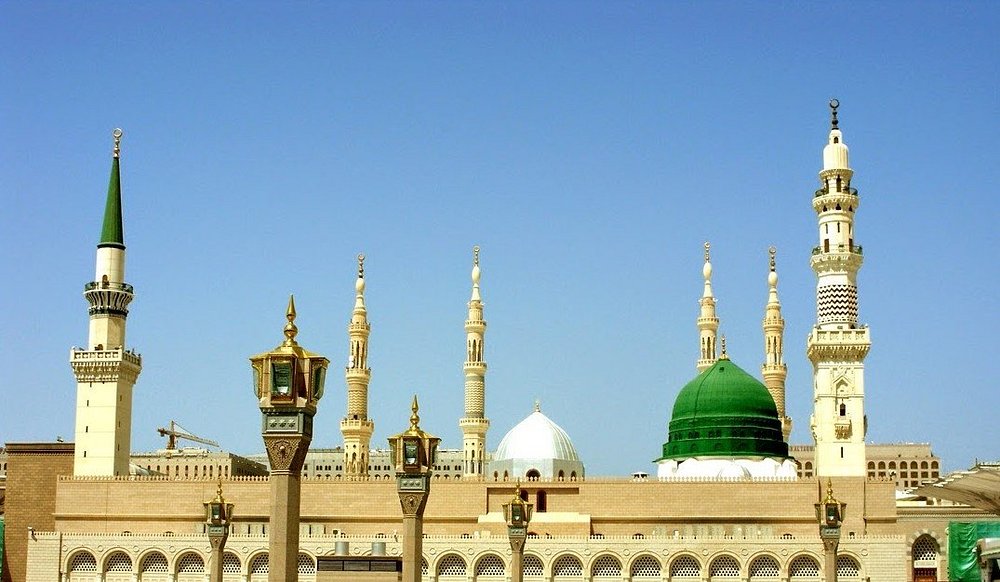
Al Masjid an Nabawi in Madinah is Islam's second-holiest mosque after Masjid al-Haram in Makkah — originally built by the Prophet Muhammad (peace be upon him) and now a vast complex around the Green Dome, where the Prophet and the first two caliphs, Abu Bakr and Umar, are buried. It anchors the Haram area in central Madinah and can host hundreds of thousands of worshippers, especially during Ramadan and Hajj seasons.
What's included
- Free entry for Muslims to the mosque complex 24 hours a day, including the main prayer halls, shaded courtyards and areas under the giant retractable umbrellas.
- Access to multiple prayer areas for men and women, Qur'an recitation circles, religious lessons (halaqat) and daily congregational prayers from Fajr through Isha.
- Facilities such as ablution areas, toilets, Zamzam water points, shoe racks, cooling fans and air conditioning in the main halls, plus clearly signed gates and security posts.
- For those with a confirmed permit, timed entry to the Rawdah (Riyadul Jannah) area between the Prophet's tomb and minbar for a short, very crowded period of extra-prayer time.
- NOT included: any paid tours, transport to Madinah, hotel stays, food and drink from nearby shops, or private guides — those are all separate arrangements.
Who it's for
- Intended for Muslim worshippers only — pilgrims on Hajj and Umrah, as well as Muslims visiting Madinah independently for prayer and reflection.
- Central spiritual stop for those who want to pray in the Prophet's mosque, send salutations upon him and spend time in one of the most revered places in Islam.
- Suitable for all adult age groups who can handle long periods of standing, walking and sitting on carpets in large crowds; elderly and disabled worshippers will find wheelchairs and some reserved spaces but still face crowds and walking distances.
- Non-Muslims are not permitted to enter Al Masjid an Nabawi or the marked sacred zones around it; they may only see the mosque from outside the Haram boundary and should follow all local signage and police instructions.
What you'll do
- As a Muslim visitor, you'll usually walk from your hotel in central Madinah towards one of the many signed gates (bawwabat) around the mosque, passing through security screening and bag checks at the perimeter.
- Enter the main prayer halls or shaded courtyard areas, find a suitable place to sit or pray, and join the five daily prayers and optional extra prayers (nawafil) according to your schedule.
- If you have a Rawdah permit, you'll go to the designated gathering point at your booked time (separate sessions for men and women), queue with your group and move with crowd control staff into the Rawdah for a few minutes of intense but brief prayer time.
- Spend extra time reciting Qur'an, making du'a and sending salawat upon the Prophet, either in the main halls or quieter side areas, being mindful of others and of mosque etiquette at all times.
- Between prayers, you may step outside to rest, eat or return to your hotel, then come back for later prayers, taraweeh in Ramadan, or simply to sit in the courtyards under the umbrellas.
Before you go
- Tickets / price (starts from): there is no ticket fee to enter Al Masjid an Nabawi — access for Muslim worshippers is free. Treat 0 SAR as the base cost and budget only for accommodation, food and transport in Madinah.
- Opening hours: the mosque is effectively open 24 hours a day, all year, with short closures only in rare exceptional circumstances. Specific areas such as the Rawdah have fixed time windows and controlled capacity.
- Rawdah access: visiting the Rawdah generally requires a timed permit via the Nusuk app, with separate slots for men and women and limited numbers per day. Rules and enforcement can change, so pilgrims should check the latest guidance before travel.
- Dress code: modest Islamic dress is mandatory — for men, long trousers or a thobe and covered shoulders; for women, an abaya or similarly loose, long clothing plus hijab covering the hair. Clothing should not be tight, transparent or attention-grabbing.
- Behaviour & restrictions: this is a sacred site — keep voices low, avoid pushing, do not run, and follow staff and security instructions. Do not block walkways, film people without consent, or attempt inappropriate acts at the Rawdah or near the graves. Sleeping across walkways, bringing large luggage and eating in main prayer areas are generally prohibited.
Good to know
- Location: Al Masjid an Nabawi sits in the centre of Madinah, surrounded by hotel blocks, shopping arcades and pedestrian plazas; most pilgrim hotels are within a few minutes' walk of the main gates.
- Time needed: many pilgrims structure their whole Madinah stay around repeated visits for prayers; even on a short stop, plan at least 2—3 hours for one unhurried visit that includes security, prayer and some time for reflection.
- Weather & comfort: Madinah can be extremely hot in daytime; the courtyards are shaded by giant umbrellas that open shortly after Fajr and often close around Maghrib, and the main halls are air conditioned, but you should still bring water (outside prayer areas) and plan for heat.
- Peak times: the mosque is especially crowded for Jumu'ah (Friday) prayer, during Ramadan and in Hajj season. At these times, arrive very early for prayers and expect tighter security and denser crowds everywhere.
- Nearby sites: many historic and religious sites associated with the Prophet and early Muslims (such as Uhud, Quba Mosque and Qiblatain) can be visited on separate trips from Madinah using licensed guides or tour companies.
Why this is worth it
Expect 0 SAR entry cost but intense crowds and deep spiritual atmosphere at Al Masjid an Nabawi — a 24/7, Muslims-only mosque in the heart of Madinah where pilgrims come mainly to pray, recite Qur'an and, with a separate Nusuk permit, briefly enter the Rawdah area between the Prophet's tomb and minbar.